Bengal Kittens

  •   One of the few domestic cats with a glittered coat — each hair tip catches light like gold dust
  •   Fascinated by water — Bengals will splash, dabble, and sometimes join you in the shower
  •   Descended from the Asian Leopard Cat — wild rosettes and glitter in a fully domestic personality
  •   Highly trainable — fetch, leash walks, and tricks come naturally to this exceptionally intelligent breed
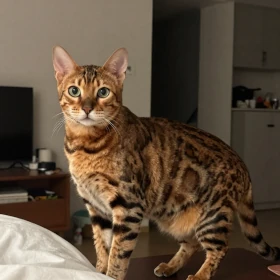
Bengal cat

Breed profile

Why choose a Bengal?

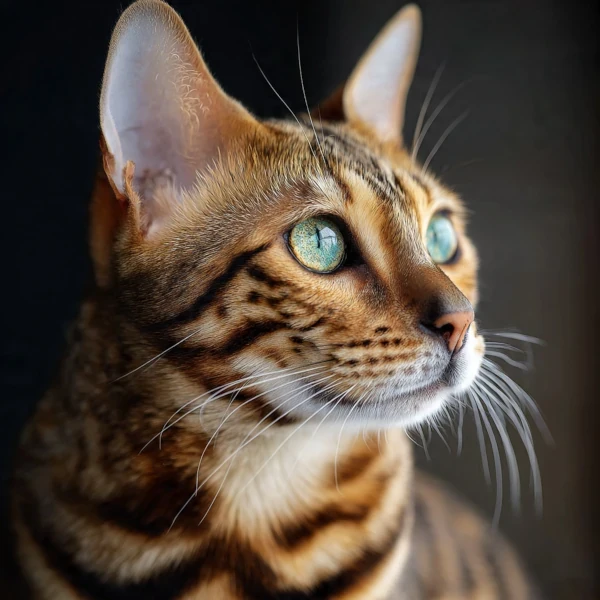
Vivid leopard-like rosettes, a silky glittered coat, and a powerfully athletic build — developed from the Asian Leopard Cat, Bengals carry the wild beauty of the jungle alongside a deeply affectionate, playful temperament that fills every room with life.

Personality & lifestyle
Affection
70%
Energy
100%
Playfulness
100%
Vocal
88%
Intelligence & training
Intelligence
95%
Trainability
90%
Compatibility
Kid-friendly
68%
Dog-friendly
65%
Stranger-friendly
60%
Care
Grooming
15%
4–7 kg
Adult weight
12–16 yrs
Life expectancy
Short / Glittered
Coat type
Gold / Green / Blue
Eye color

Pricing & availability

Reserve your Bengal

Small litters, genuine wild heritage — spots go before the litter is born

From €1,200
Price depends on quality tier

How to reserve

  1. Message us on Telegram with your preferences
  2. Pay €200 deposit to hold your place in the queue
  3. We match you with the right kitten from the litter
  4. Pay the balance on handover — deposit fully deducted

No kitten is allocated without a confirmed deposit.

July 2026
Waitlist open

Join the waitlist

Bengal litters are small — typically 4–5 kittens — and demand consistently outpaces supply. Joining is free with no obligation. We update you on Telegram as the litter develops; you decide if and when to proceed.

Message us on Telegram

Delivery to your door

We arrange transport with licensed pet couriers across the EU, UK, and beyond. Quoted by destination, ask us for an estimate anytime.

Every kitten includes
No exceptions, no hidden extras

Documentation & care

  • Pedigree certificate (WCF / TICA)
  • Age-appropriate vaccinations
  • Microchip & ISO registration
  • EU pet passport
  • Full vet health clearance
  • Ready at 12 weeks minimum
  • Home-raised & well socialised
  • 30-day breeder support after handover

Parent health tests on file

  • PRA-b — Progressive Retinal Atrophy
  • PK-Def — Pyruvate Kinase Deficiency

Both parents tested clear. Results shared on request.

All prices are in EUR and include every item listed above. Transport is quoted separately. We stand behind the health of every kitten we place — questions before committing? Just ask.

Frequently Asked Questions

Our clients want to know

Where do Bengal cats come from?

The Bengal was developed in the United States in the 1960s and 70s by geneticist Jean Mill, who crossed domestic cats with the Asian Leopard Cat — a small, wild feline native to South and Southeast Asia. The goal was to create a breed with the exotic, luminous coat of a wild cat paired with the gentle, affectionate temperament of a domestic companion. The result was one of the most visually spectacular and beloved breeds in the world today.

How big do Bengal cats get?

Bengals are a medium to large breed with a powerful, athletic, and distinctly muscular build. Males typically weigh 5–7 kg, females 4–5 kg. Their long, robust bodies are built for agility, speed, and climbing — they are surprisingly strong and remarkably quick, with a physical presence that immediately commands attention and reflects their wild ancestry.

Are Bengals good with children and other pets?

Bengals are confident, playful, and highly social — qualities that make them excellent companions in energetic, engaged family households. They thrive alongside children who can match their bold, active spirit and generally coexist well with other cats and cat-friendly dogs. Their intelligence and adaptability make them one of the most interactive and stimulating family breeds available, provided they receive the mental and physical engagement they need daily.

Can Bengal cats live outdoors?

While Bengals have an instinctive drive to explore, climb, and hunt, we strongly recommend keeping them as indoor cats or providing access only through a fully secured outdoor enclosure. Their fearless, highly confident nature makes them prone to roaming far and engaging with risks. Indoors, they thrive with tall cat trees, puzzle feeders, interactive toys, and dedicated daily play sessions that channel their extraordinary energy constructively.

What coat colors and patterns does the Bengal have?

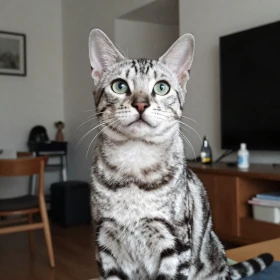
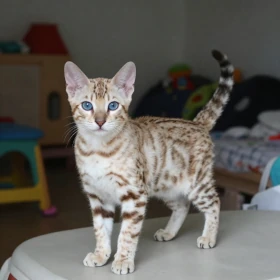
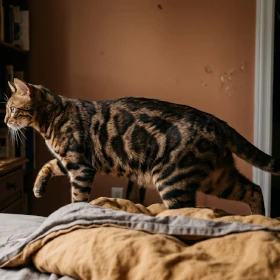
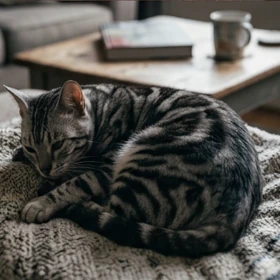
The Bengal's coat is its most celebrated feature — a short, incredibly soft, and often glittered pelt adorned with vivid rosettes or marbling that closely mirrors the markings of a wild leopard or jaguar. Recognised colors include brown, silver, snow (seal lynx, seal mink, seal sepia), and blue. The rosette pattern — where spots form distinct outlined clusters — is unique among domestic cat breeds and gives every Bengal the appearance of a miniature exotic wild cat.

What eye color do Bengal cats have?

Bengals have large, oval-shaped eyes that come in striking shades of gold, green, or blue — with blue and aqua eyes most common in snow-colored individuals. Set within their broad, sculptural head and framed by their boldly patterned coat, their eyes convey an intense, piercing alertness that reflects both their wild heritage and their sharp, highly observant intelligence. Few breeds can match the raw visual impact of a Bengal's gaze.

How much grooming do Bengal cats require?

The Bengal is one of the easiest breeds to maintain in terms of coat care. Their short, dense, pelt-like coat lies close to the body, sheds minimally, and requires little more than an occasional gentle brush to keep it gleaming. No professional grooming or regular bathing is typically needed. Routine ear cleaning, nail trims, and dental care complete their straightforward grooming routine — leaving more time for play, which is always their preference.

Are Bengals a vocal breed?

Bengals are a notably vocal breed with a wide and distinctive range of sounds — from chirps, trills, and chattering to loud, insistent meows when they want attention or feel understimulated. They are communicative, expressive, and will not hesitate to tell you exactly what they think. For owners who enjoy an interactive, conversational relationship with their cat, the Bengal's vocal personality is one of its most endearing and entertaining traits.

Are Bengals prone to any genetic health issues?

Bengals can be predisposed to Progressive Retinal Atrophy (PRA) — a hereditary condition affecting vision — as well as Hypertrophic Cardiomyopathy (HCM), the most common heart condition in cats. Our breeding cats are rigorously screened by certified specialists for both conditions, and all kittens come with a written genetic health guarantee and full veterinary documentation for complete peace of mind.

How long do Bengal cats live?

With proper care, Bengal cats typically live between 12–16 years, with many remaining active and vigorous well into their teens. Their longevity is best supported by regular veterinary check-ups, a high-quality protein-rich diet, and a stimulating, enriched indoor environment that keeps their powerful minds and bodies engaged. Their exceptional vitality — a direct reflection of their wild heritage — means a well-cared-for Bengal remains playful and alert for many years.

Are Bengals hypoallergenic?

No cat breed is truly hypoallergenic, and the Bengal is no exception. The primary feline allergen — Fel d 1 — is a protein found in saliva and skin secretions rather than in the coat itself. However, because the Bengal's short, pelt-like coat sheds very little and spreads minimal dander, many allergy-sensitive individuals find them considerably more tolerable than heavier-shedding breeds. We always recommend a visit before committing if allergies are a concern.

Do Bengals enjoy being held and cuddled?

Bengals are affectionate and deeply bonded to their owners, but they tend to express love through activity and presence rather than prolonged passive cuddling. They will follow you from room to room, join you on the sofa, and sleep close beside you — but they are at their happiest when engaged in play, exploration, or interactive games with the people they love. They are the ideal companion for someone who wants a deeply connected, actively engaged relationship rather than a lap cat.

What diet is recommended for Bengal cats?

Bengals are powerful, highly active cats and their diet should be worthy of their athletic build. A premium, high-protein diet — ideally with a strong emphasis on quality wet food to mirror their natural prey-based nutritional needs — is strongly recommended to support lean muscle mass, coat condition, and sustained energy. Raw or raw-complementary feeding is popular among Bengal owners and well-suited to the breed's physiology. We send each kitten home with a detailed feeding guide and the food they are already accustomed to, ensuring a smooth and stress-free transition.

Have a question? Just message us.

We reply within a few hours. Ask about available kittens, upcoming litters, pricing, shipping to your country — anything at all. No pressure, no forms.

Find Your Kitten
info@balkitten.me +38267962261, +38269429219