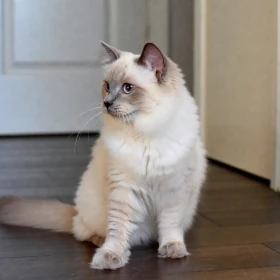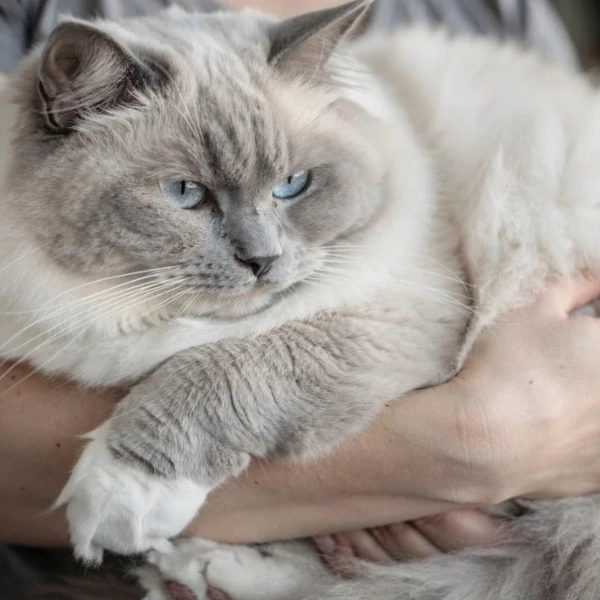
Ragdoll Kittens

  •   They go limp in your arms — literally named for it, and still the only breed in the world bred specifically for this trait
  •   Always blue eyes, without exception — every Ragdoll, every colour, every pattern, for life
  •   Three patterns in one breed — Colorpoint, Mitted, and Bicolor, each with its own distinctive look
  •   Temperament was the founding purpose — Ann Baker bred Ragdolls for gentleness first, appearance second
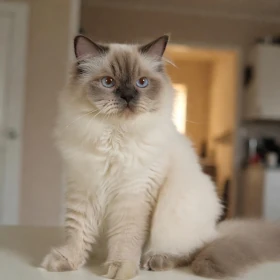
Ragdoll cat

Breed profile

Why choose a Ragdoll?

Silky semi-long coat, vivid blue eyes, and a temperament so gentle it gave the breed its name — the Ragdoll is the closest thing to the perfect indoor companion cat ever deliberately created. Large enough to be impressive, calm enough for any household, devoted enough to follow you everywhere.

Personality & lifestyle
Affection
98%
Energy
45%
Playfulness
60%
Vocal
30%
Intelligence & training
Intelligence
75%
Trainability
70%
Compatibility
Kid-friendly
98%
Dog-friendly
90%
Stranger-friendly
90%
Care
Grooming
40%
5–10 kg
Adult weight
12–17 yrs
Life expectancy
Semi-long / Silky
Coat type
Always Blue
Eye color

Pricing & availability

Reserve your Ragdoll

They go limp in your arms, follow you room to room — no breed loves people quite like the Ragdoll

From €1,100
Price depends on quality tier

How to reserve

  1. Message us on Telegram with your preferences
  2. Pay €200 deposit to hold your place in the queue
  3. We match you with the right kitten from the litter
  4. Pay the balance on handover — deposit fully deducted

No kitten is allocated without a confirmed deposit.

October 2026
Waitlist open

Join the waitlist

Ragdolls are one of our most requested breeds — litters of 4–6 kittens are claimed quickly, often before the birth is announced publicly. Joining is free with no obligation. We keep you updated on Telegram every step of the way.

Message us on Telegram

Delivery to your door

We arrange transport with licensed pet couriers across the EU, UK, and beyond. Quoted by destination ask us for an estimate anytime.

Every kitten includes
No exceptions, no hidden extras

Documentation & care

  • Pedigree certificate (TICA / WCF)
  • Age-appropriate vaccinations
  • Microchip & ISO registration
  • EU pet passport
  • Full vet health clearance
  • Ready at 12 weeks minimum
  • Home-raised & well socialised
  • 30-day breeder support after handover

Parent health tests on file

  • HCM — Hypertrophic Cardiomyopathy
  • PKD — Polycystic Kidney Disease

Both parents tested clear. Results shared on request.

All prices are in EUR and include every item listed above. Transport is quoted separately. We stand behind the health of every kitten we place — questions before committing? Just ask.

Frequently Asked Questions

Our clients want to know

Where do Ragdoll cats come from?

The Ragdoll was developed in Riverside, California in the early 1960s by breeder Ann Baker, who selectively bred cats specifically for an unusually calm and docile temperament rather than for appearance alone. The breed takes its name from the distinctive tendency of early individuals to go completely limp and relaxed when picked up — much like a child's ragdoll toy. Ann Baker trademarked the name and established her own registry, the International Ragdoll Cat Association (IRCA), to maintain control over the breed's development. The Ragdoll was subsequently recognised by TICA and CFA and is now one of the most popular pedigree cat breeds worldwide.

How big do Ragdoll cats get?

The Ragdoll is one of the largest domestic cat breeds. Males typically weigh 6–9 kg at full maturity, with some individuals exceeding 10 kg. Females are smaller at 4–6 kg. They have a long, rectangular, heavily boned body, broad chest, and a full, plumed tail. Like the Maine Coon and Siberian, the Ragdoll is a slow-maturing breed — most do not reach full size, coat length, or colour depth until 3–4 years of age.

Are Ragdolls good with children and other pets?

Ragdolls are renowned for being one of the most gentle, tolerant, and sociable of all cat breeds. They bond warmly with every member of the household, are exceptionally patient with children — remaining calm even during boisterous play — and coexist peacefully with other cats and cat-friendly dogs. Their even, unflappable temperament makes them one of the safest breeds to introduce into a busy family home.

Can Ragdoll cats live indoors?

Ragdolls are ideally suited to full indoor life and should not be allowed to roam freely outdoors. Their extreme docility and trust of strangers — traits deliberately bred into them — means they lack the natural wariness that keeps most cats safe outside. Indoors they thrive with moderate play, comfortable resting spots, and above all human company. They do not do well when left alone for long periods and are happiest in homes where someone is present for most of the day, or where they have another animal companion.

What coat colors and patterns does the Ragdoll have?

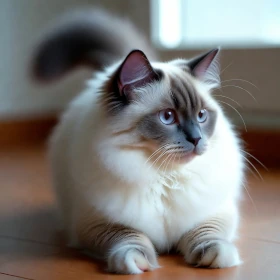
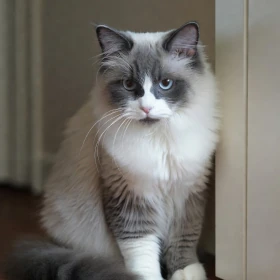
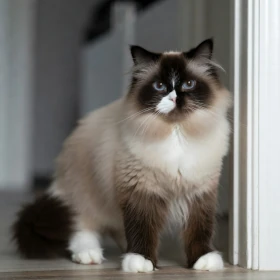
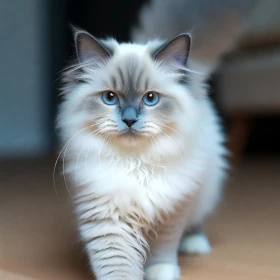
The Ragdoll always comes in a colorpoint pattern, recognized in three distinct types: Colorpoint (points only), Mitted (white paws and chin), and Bicolor (an inverted V of white on the face and white on the underside). Point colors include seal, blue, chocolate, lilac, red, and cream, as well as lynx and tortie variations. The coat is silky, semi-long, and unusually low-matting — lacking a dense undercoat — giving it a flowing texture far easier to maintain than most longhaired breeds. Colors deepen and develop for the first 2–3 years of life.

What eye color do Ragdoll cats have?

Every Ragdoll has vivid, deep blue eyes — this is a defining characteristic of the breed, consistent across all point colors and pattern types without exception. The intensity of blue ranges from a pale icy cornflower to a deep, saturated sapphire, and tends to become richer and more vivid as the cat matures. Set within a broad, flat-topped head with full cheeks, those blue eyes give every Ragdoll its instantly recognisable, serene, and deeply gentle expression.

How much grooming do Ragdoll cats require?

Despite its flowing appearance, the Ragdoll coat is one of the most manageable of any semi-longhaired breed. Because it lacks a dense undercoat, it is far less prone to matting than breeds such as the Persian or Norwegian Forest Cat. A gentle brush two to three times per week is generally all that is needed to keep it in excellent condition. Shedding increases seasonally, particularly in spring, when more frequent brushing is beneficial. Routine ear cleaning, nail trims, and dental hygiene round out their regular care needs.

Are Ragdolls a vocal breed?

Ragdolls are a quiet, softly spoken breed. They communicate through gentle, melodic chirps and soft meows rather than demanding vocalisations, and tend to use their voice to invite interaction rather than to insist on it. They are attentive and responsive — often following their owners from room to room in companionable silence — and their communication style perfectly mirrors their temperament: warm, undemanding, and entirely peaceable.

Are Ragdolls prone to any genetic health issues?

The primary health concern in Ragdolls is Hypertrophic Cardiomyopathy (HCM), for which a genetic mutation (MYBPC3) has been identified in the breed. Our breeding cats are screened annually by certified veterinary cardiologists and tested for known HCM genetic markers before any litter is planned. All kittens come with a written genetic health guarantee and full veterinary documentation. Bladder stones and urinary tract issues have also been reported in the breed, and we advise all new owners on appropriate dietary measures to support urinary health.

How long do Ragdoll cats live?

With proper care, Ragdolls typically live between 12–17 years — one of the longer potential lifespans among the larger semi-longhaired breeds. Their longevity is best supported by regular veterinary check-ups including annual cardiac screening, a high-quality diet with attention to urinary health, and a calm, enriched indoor environment that suits their gentle, people-oriented nature perfectly.

Are Ragdolls hypoallergenic?

No cat breed is truly hypoallergenic. Ragdolls produce the Fel d 1 protein that triggers most cat allergies, and their semi-long coat does shed — particularly during seasonal transitions. Some owners with mild sensitivities report that the Ragdoll's single-layer, low-dander coat causes fewer reactions than breeds with denser undercoats, though this is highly individual. We always recommend spending time with the breed before committing if allergies are a concern.

Do Ragdolls enjoy being held and cuddled?

Ragdolls are among the most affectionate and physically approachable of all domestic cat breeds. They actively seek human contact, are happy to be carried, draped over a shoulder, or settled in a lap for extended periods — and their characteristic tendency to go completely limp and relaxed when held makes the experience of cuddling a Ragdoll quite unlike that of any other breed. They greet their owners at the door, follow them from room to room, and often sleep alongside them. For those who want a cat that genuinely behaves like a warm, devoted companion, the Ragdoll is the definitive choice.

What diet is recommended for Ragdoll cats?

A high-protein, high-quality diet is important for the Ragdoll, supporting both their large, slow-developing frame and long-term urinary tract health. Premium wet food forms an important part of their diet, ensuring adequate hydration — a factor particularly relevant given the breed's reported susceptibility to urinary issues. A measured amount of quality dry kibble can complement the wet food. We send each kitten home with a detailed feeding guide and the food they are already accustomed to, ensuring a smooth and stress-free transition.

Have a question? Just message us.

We reply within a few hours. Ask about available kittens, upcoming litters, pricing, shipping to your country — anything at all. No pressure, no forms.

Find Your Kitten
info@balkitten.me +38267962261, +38269429219