Siberian Kittens

  •   Documented in Russian fairy tales since the year 1000 — not bred by humans, but forged by a thousand years of Siberian winters
  •   The original low-allergen cat — the Siberian is the breed the science was first done on, and the results hold up
  •   Three-layer waterproof coat built to survive -40°C — on your sofa, it's simply the most magnificent fur in the domestic cat world
  •   They keep getting better — full coat, full size, full character only at 5 years, longer than almost any other pedigree breed
Siberian cat

Breed profile

Why choose a Siberian?

A triple waterproof coat, the physique of an athlete, the temperament of a devoted companion, and one of the lowest allergen profiles in the domestic cat world — the Siberian is nature's masterpiece, untouched by human design for a thousand years and still without equal among the great semi-longhaired breeds.

Personality & lifestyle
Affection
88%
Energy
75%
Playfulness
80%
Vocal
50%
Intelligence & training
Intelligence
92%
Trainability
78%
Compatibility
Kid-friendly
88%
Dog-friendly
80%
Stranger-friendly
72%
Care
Grooming
62%
4–10 kg
Adult weight
12–15 yrs
Life expectancy
Semi-long / Triple
Coat type
Gold / Green / Copper
Eye color

Pricing & availability

Reserve your Siberian

Centuries of Russian winters shaped a cat unlike any other — powerful, loyal, and lower on allergens

From €950
Price depends on quality tier

How to reserve

  1. Message us on Telegram with your preferences
  2. Pay €200 deposit to hold your place in the queue
  3. We match you with the right kitten from the litter
  4. Pay the balance on handover — deposit fully deducted

No kitten is allocated without a confirmed deposit.

July 2026
Limited spots

Join the waitlist

Siberians attract particular interest from allergy-sensitive households — spots on this litter (4–7 kittens) fill faster than most. Joining is free with no obligation. We update you on Telegram and you choose if and when to proceed.

Message us on Telegram

Delivery to your door

We arrange transport with licensed pet couriers across the EU, UK, and beyond. Quoted by destination ask us for an estimate anytime.

Every kitten includes
No exceptions, no hidden extras

Documentation & care

  • Pedigree certificate (WCF / SFF)
  • Age-appropriate vaccinations
  • Microchip & ISO registration
  • EU pet passport
  • Full vet health clearance
  • Ready at 12 weeks minimum
  • Home-raised & well socialised
  • 30-day breeder support after handover

Parent health tests on file

  • HCM — Hypertrophic Cardiomyopathy

Parents tested clear. Results shared on request. Siberians naturally produce lower levels of Fel d 1 — the protein most commonly linked to cat allergies.

All prices are in EUR and include every item listed above. Transport is quoted separately. We stand behind the health of every kitten we place — questions before committing? Just ask.

Frequently Asked Questions

Our clients want to know

Where do Siberian cats come from?

The Siberian is one of the oldest and most naturally evolved cat breeds in the world, indigenous to the forests and steppes of Russia. References to large, long-coated Russian cats appear in folk tales and written records as far back as the year 1000 AD, and the breed features prominently in Russian fairy tales as a magical forest guardian. Unlike most modern pedigree breeds, the Siberian was shaped entirely by natural selection — centuries of survival in one of the world's harshest climates produced a large, rugged, triple-coated cat of exceptional health and resilience. Formal selective breeding began in Leningrad in the 1980s, and the breed was first exported to the United States in 1990. It is today recognised by all major international cat registries worldwide.

How big do Siberian cats get?

The Siberian is a large, powerfully built, and athletically muscular breed. Males typically weigh 6–9 kg, with some exceptional individuals reaching 10–12 kg. Females are smaller at 4–7 kg. They have a broad, rounded head, a strong barrel chest, substantial bone structure, and remarkably powerful hindquarters that give them an extraordinary jumping ability. The Siberian is one of the slowest-maturing cats, often not reaching full physical and coat development until 4–5 years of age — longer than almost any other pedigree breed.

Are Siberians good with children and other pets?

Siberians are devoted, highly social, and deeply people-oriented — bonding strongly with their entire household. They are gentle and patient with children, tolerant and curious toward other cats and cat-friendly dogs, and adapt readily to a busy, active household. Despite their wild, forest-cat appearance, their temperament is warm, calm, and deeply companionable. Many Siberian owners describe them as having a quality of genuine emotional attunement rarely found in other breeds.

Can Siberian cats live indoors?

Siberians adapt well to indoor life when provided with adequate space, vertical enrichment, and regular interactive play. Their natural athleticism and intelligence mean they genuinely appreciate tall climbing structures, puzzle feeders, and engaging play sessions — they are not content to simply sit and observe. If outdoor access is offered, a secure enclosed garden or catio is strongly recommended: the Siberian's confidence, agility, and hunter's instincts make them extremely effective and enthusiastic explorers of any environment they can reach.

What coat colors and patterns does the Siberian have?

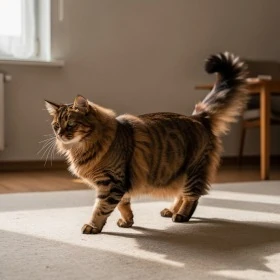
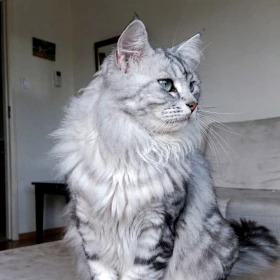
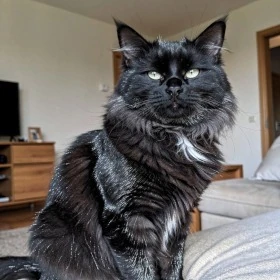
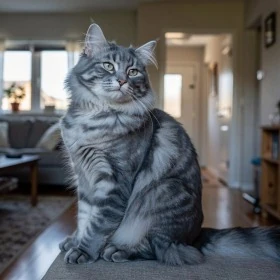
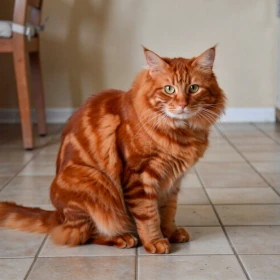
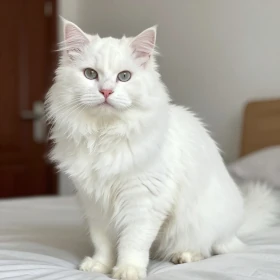
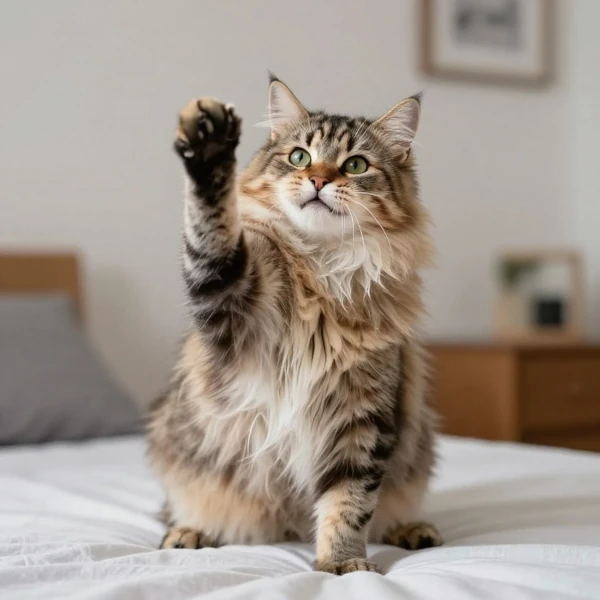
The Siberian coat is a full triple layer — long water-repelling outer guard hairs, a dense middle awn layer, and a soft insulating undercoat — naturally water-resistant and less prone to matting than most longhaired breeds. The breed is accepted in almost every colour and pattern: brown tabby, silver tabby, black, blue, red, cream, tortoiseshell, white, and smoke variations are all fully recognised. The only colour not accepted in the Siberian is colourpoint — that variation is classified separately as the Neva Masquerade. Coat volume and texture develop progressively, reaching full magnificence at 4–5 years of age.

What eye color do Siberian cats have?

Siberian eye colour varies freely across the spectrum — deep gold, warm copper, vivid green, and blue-green are all seen and all equally valid. Unlike many breeds, eye colour is not strictly linked to coat colour, which means striking combinations — a silver tabby with vivid green eyes, a black smoke with deep amber — are entirely common. White Siberians may have blue, odd-coloured, or green eyes. The only fixed eye colour in the Siberian family is the sapphire blue of the Neva Masquerade, which is governed by the separate colorpoint gene.

How much grooming do Siberian cats require?

Despite the sheer volume of the Siberian's triple coat, it is considerably more manageable than its appearance suggests. The water-resistant, low-static guard hairs mean the coat sheds dirt readily and resists tangling far better than many other longhaired breeds. Two to three thorough brushing sessions per week are sufficient for most of the year. The exception is the twice-yearly seasonal moult — particularly the spring shed — when daily brushing is strongly recommended to manage the undercoat. Routine ear cleaning, nail trims, and dental care complete their regular needs.

Are Siberians a vocal breed?

The Siberian is a moderately vocal and genuinely communicative breed. They use a varied repertoire — chirps, trills, soft meows, and the occasional emphatic trill — and are conversational when engaged. They are vocal enough to feel like an active presence in the household without being insistent or demanding. Their communication is interactive rather than performative — they speak when they have something to say, and listen attentively when spoken to.

Are Siberians prone to any genetic health issues?

The Siberian is one of the healthiest of the large semi-longhaired breeds, with fewer known hereditary conditions than many popular alternatives. The primary health concern is Hypertrophic Cardiomyopathy (HCM). Our breeding cats are screened annually by certified veterinary cardiologists, and all kittens come with a written genetic health guarantee and full veterinary documentation. The breed's centuries of natural selection in a demanding environment have produced a robust, resilient constitution that compares very favourably with many purpose-bred pedigree cats.

How long do Siberian cats live?

With proper care, Siberians typically live between 12–15 years, and many individuals reach their mid-to-late teens in excellent health. Their longevity is best supported by regular veterinary check-ups including annual cardiac screening, a high-protein diet suited to their large, active frame, and an enriched indoor environment that keeps their considerable intelligence engaged. Their natural constitution and lack of extreme physical modifications gives them a significant health advantage over many more fashionable pedigree alternatives.

Are Siberians hypoallergenic?

The Siberian is one of the most thoroughly documented breeds in relation to low allergen production. Multiple independent studies have found that Siberians produce significantly lower levels of the Fel d 1 protein than most other breeds — the primary glycoprotein responsible for triggering cat allergies in humans. Many people who react to other cats can live comfortably with a Siberian. This is not a guarantee — individual Fel d 1 levels vary between cats of the same breed, and individual human sensitivity varies equally. We strongly recommend an extended visit before committing if allergies are a factor.

Do Siberians enjoy being held and cuddled?

Siberians are affectionate and physically engaged companions without being overly dependent. They enjoy being close to their people — settling nearby, following from room to room, and participating in household life with obvious interest — and are typically comfortable being picked up and held, particularly once settled in their home. They show affection in a steady, confident way: warm and genuine, but never anxious or needy. Many owners describe the Siberian as having a quality of calm, attentive companionship that sets it apart from almost any other breed they have known.

What diet is recommended for Siberian cats?

A high-protein, meat-based diet suits the Siberian's large, muscular, athletically active frame and supports both their slow-developing physique and the condition of their triple coat. A combination of premium wet food — which supports hydration and urinary health — and measured quality dry kibble works well for most individuals. Omega-3 fatty acid supplementation is particularly beneficial for coat volume and lustre, especially during and after the seasonal moults. We send each kitten home with a detailed feeding guide and the food they are already accustomed to, ensuring a smooth and stress-free transition.

Have a question? Just message us.

We reply within a few hours. Ask about available kittens, upcoming litters, pricing, shipping to your country — anything at all. No pressure, no forms.

Find Your Kitten
info@balkitten.me +38267962261, +38269429219